
Hair Bond Repair Explained: How to Choose the Right Treatment
“Bond repair” gets thrown about a lot on product packaging, but it’s not one single thing. It’s a category of treatment that targets disulphide bonds, the internal structures that give hair its strength and shape. When those bonds break down from colour services, heat styling or everyday wear, hair loses elasticity, snaps more easily and stops holding a style the way it should.
For anyone recommending or applying these treatments in-chair, understanding what’s actually happening at bond level, and how the major systems differ, makes it far easier to set realistic client expectations and choose the right product for the job.
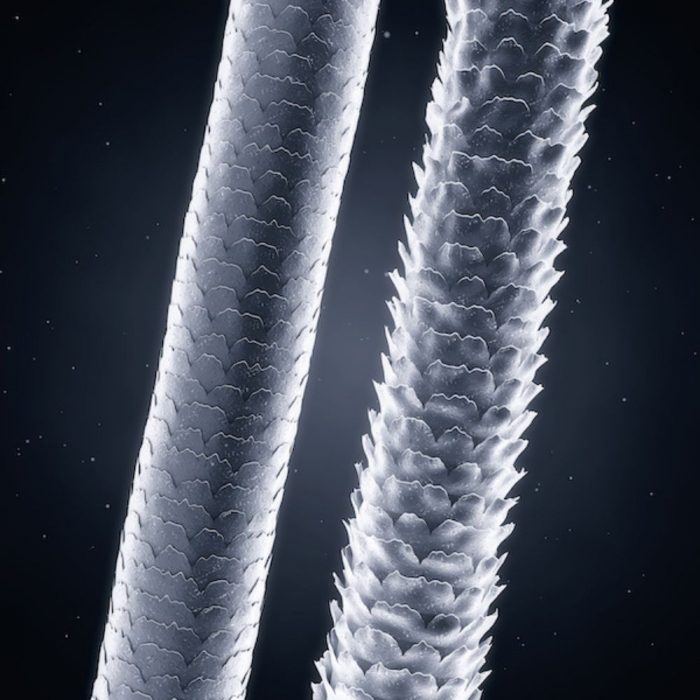
What Is Bond Repair?
Bond repair refers to a treatment or range of products designed to rebuild the internal bonds within the hair fibre, primarily disulphide bonds, which are broken down by chemical processing, heat and environmental stress. Unlike a standard conditioner, which works on the hair’s surface, bond repair actives are formulated to penetrate the cortex and help restore internal strength and elasticity.
It’s worth being precise with clients here. “Bond builder” isn’t a regulated term, so products marketed this way don’t all target the same bonds or work at the same depth. Some genuinely rebuild internal structure. Others are well-formulated conditioning treatments borrowing the language.
The Science: Which Hair Bonds Actually Get Repaired
Disulphide Bonds
These are the strong, covalent bonds within the hair’s cortex, and they’re the ones most affected by chemical services such as bleaching, colouring, perming and relaxing. Disulphide bonds are also the primary target of genuine bond repair treatments, since rebuilding them is what restores structural strength rather than just surface smoothness.
Hydrogen and Salt Bonds
These are weaker, more temporary bonds. Hydrogen bonds break when hair gets wet and reform as it dries, which is why wet styling and blow-drying reshape hair without any chemical change. Salt (ionic) bonds are sensitive to pH shifts, which is why harsh shampoos or high-alkaline services can leave hair feeling compromised even without heat or lightener involved.
Knowing the difference matters at consultation. A client whose hair simply feels “off” after a colour correction may need pH-balancing care rather than a full bond repair protocol.
Signs a Client Needs Bond Repair
Look out for:
- Hair that feels straw-like or brittle, particularly after lightening services
- Reduced elasticity, hair that snaps rather than stretches when wet
- Dullness or lack of shine despite regular conditioning
- Increased breakage around mid-lengths and ends
- Difficulty holding a style or curl pattern that used to set easily
If two or more of these show up during consultation, especially on chemically treated hair, it’s worth building a bond repair step into the service.
How the Major Bond Repair Systems Differ
Not every bond repair system works the same way or slots into the same part of the service. Some are mixed directly into colour or bleach, others are applied afterwards, and some are designed purely for take-home maintenance. Here’s how the four main systems stack up.
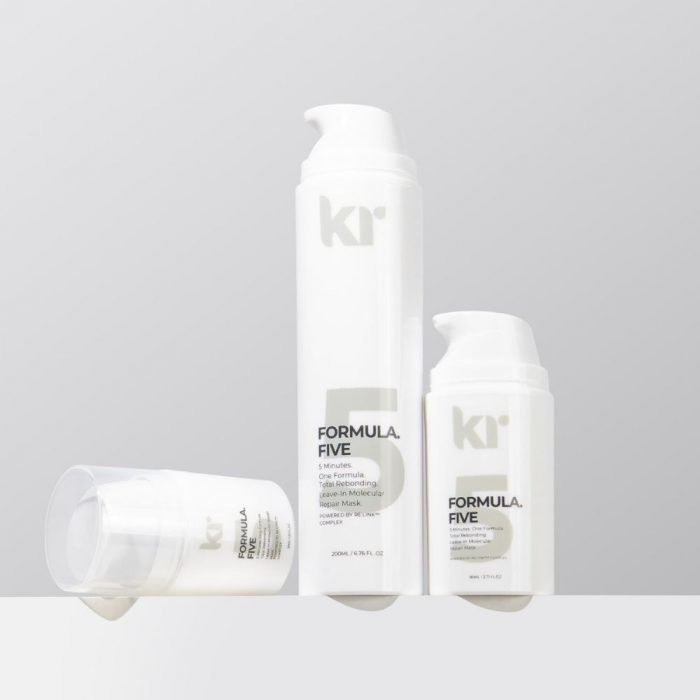
Keratin Revolution Formula.Five
Best for: a quick in-service upgrade and easy retail conversion
Formula.Five is a leave-in, no-rinse treatment built around a molecular repair complex designed to reconnect broken keratin and peptide bonds. It’s lightweight and absorbs quickly, making it easy to add into a blow-dry service without extending the appointment. It’s also designed to work with heat rather than against it, so activating it with a blow-dry or iron enhances rather than undoes the treatment. It comes in a backwash size, which makes it one of the simplest ways to let clients feel the results in-chair before recommending a take-home size.
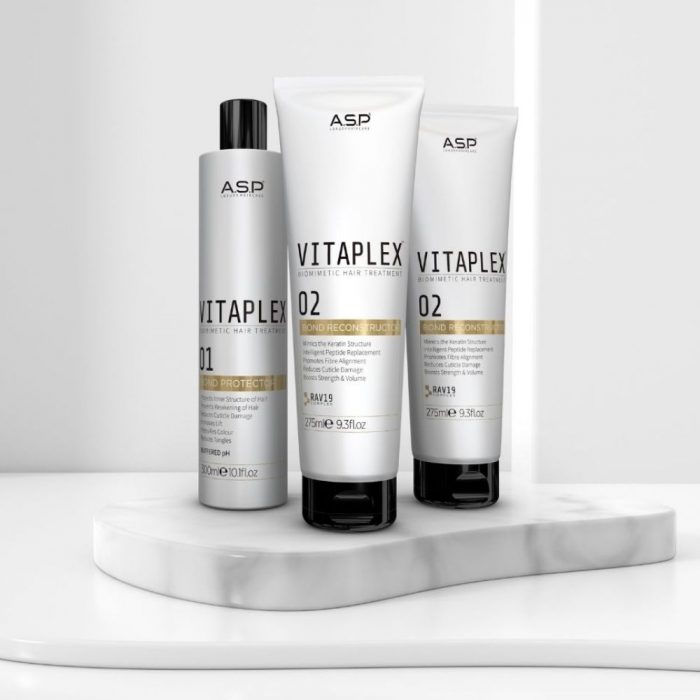
A.S.P Affinage Vitaplex
Best for: protecting hair during colour and lightening services
Vitaplex is a three-part system built around a biomimetic complex that replicates the amino acids found naturally in keratin. Part 1 is added directly into the colour or lightening mix to support the hair fibre during processing. Part 2 is applied after rinsing to help rebuild the bonds affected by the chemical service. Part 3 is a take-home leave-in treatment for maintaining condition between visits. Because Part 1 works inside the colour formula itself, Vitaplex is a strong option for salons wanting bond protection built into every colour and lightening service by default, rather than offered as a separate add-on.
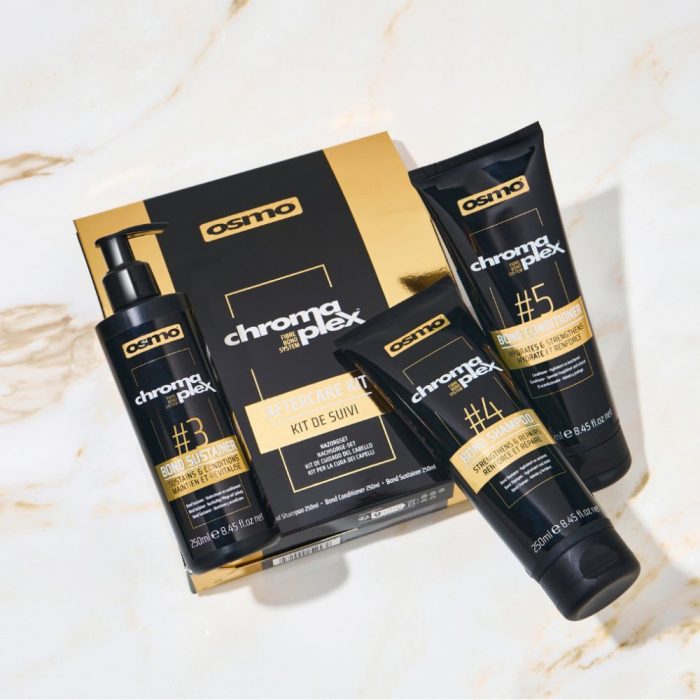
OSMO Chromaplex
Best for: salons running frequent colour and bleach services on a budget
Chromaplex uses OSMO’s Fibre Bond Technology across a three-step process: Bond Builder is mixed into the colour or bleach formula, Bond Sealer is applied afterwards to stabilise the new bonds and add shine, and Bond Sustainer is a twice-weekly at-home treatment to maintain results. It’s formulated with hydrolysed wheat protein and keratin, and is generally positioned as a more affordable alternative to premium bond-building brands while covering the same in-service-to-aftercare journey.
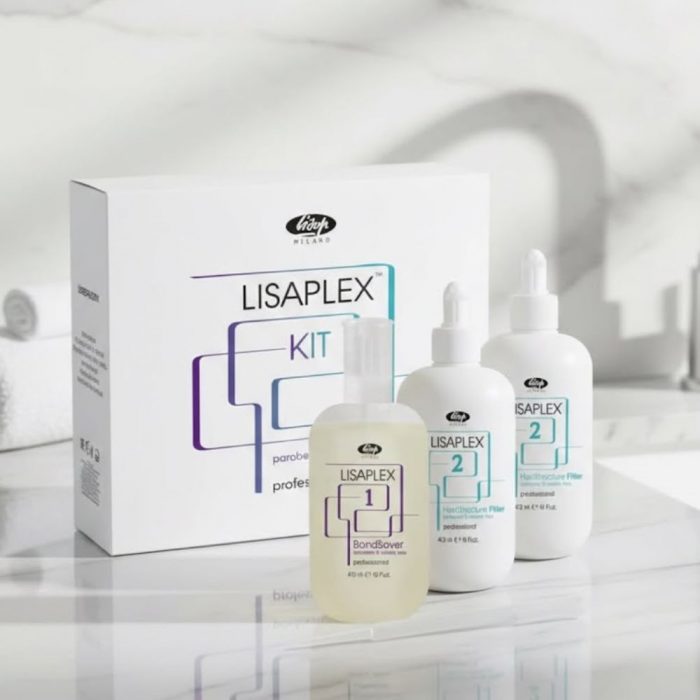
Lisap Lisaplex
Best for: a streamlined two-step system across multiple chemical services
Lisaplex takes a slightly different approach with a two-step system rather than three. Bond Saver is a shielding fluid used during chemical services to protect the hair’s internal and external structure. HairStructure Filler follows to reconstruct the cuticle and lock in a protective, nourishing layer. It’s built around an Organic Protein Complex and is free from parabens and sulphates, making it a good fit for salons that want fewer steps in the service without cutting corners on protection.
Building Bond Repair Into Your Service Menu
Bond repair works best as a considered addition, not a blanket upsell. Overusing strong bond-building actives can leave hair feeling stiff or protein-overloaded, particularly on finer hair types. A sensible approach:
- Use in-service during or immediately after chemical processing, when bonds are most compromised
- Recommend a take-home version for clients with ongoing colour or heat styling routines
- Alternate with a moisturising mask where a client needs hydration alongside strength
- Reassess at each visit rather than defaulting every client to the same protocol
Beyond Bond Repair: Rounding Out the Aftercare Routine
Bond repair works best as part of a full aftercare routine rather than in isolation. For clients who need ongoing support between visits, explore our repair shampoo and conditioner range for daily maintenance, hair repair masks for weekly deeper conditioning, and repair serums and oils to seal in results and protect against future damage.
FAQs
What’s the difference between bond repair and a regular conditioning treatment?
Conditioners work on the hair’s surface to improve softness and manageability. Bond repair treatments penetrate the cortex to target disulphide bonds, addressing structural damage rather than surface feel.
Is Vitaplex, Chromaplex or Lisaplex better for a busy colour salon?
All three are designed to work directly with colour and lightening services, so the choice often comes down to workflow. Chromaplex and Vitaplex use three-part processes with a distinct in-formula, post-rinse and aftercare stage, while Lisaplex condenses this into two steps, which can suit salons wanting fewer stages per service.
Can bond repair be used during a colour or lightening service?
Yes. Vitaplex, Chromaplex and Lisaplex are all designed to be added directly into colour, bleach or chemical formulas. Formula.Five, by contrast, is a leave-in treatment used after the service or as part of an ongoing routine rather than mixed into colour.
Is bond repair suitable for all hair types?
Most professional bond repair systems are suitable across hair types, though frequency of use should be adjusted. Heavily processed or bleached hair generally benefits from more frequent treatment than virgin or lightly coloured hair.
Explore our full hair bonding systems range to find the right fit for your salon’s service menu.
Comments are closed here.