
The New OSMO IKON Shade System: Your Ultimate Cross-Reference Guide
Opened a fresh delivery of OSMO IKON and found unfamiliar shade numbers staring back at you? You’re not alone. In fact, OSMO has refreshed its entire shade numbering system — new names, new references, new tonal family groupings. However, the formula inside every tube? Completely unchanged. As OSMO put it themselves: “Same formula, brand new look.”
This guide gives you every old-to-new shade reference, straight from OSMO, so you can update your colour bar, brief your team, and get back to it.
Shop the full OSMO IKON range at Adel Direct
Why Did OSMO Change the Shade Numbers?
Accuracy. OSMO has moved to a fully numbered system based on the International Colour System, so every shade now properly reflects what’s inside the tube.
- The number before the decimal = depth level (1 = black, 10 = lightest blonde)
- The first number after the decimal = dominant reflect
- The second number after the decimal = secondary tone
So 7.43 = 7 (blonde) + .4 (copper) + .3 (gold) = Copper Gold Blonde. The old system mixed letter codes (NW, CHOC, GM-DA) with numbers inconsistently. The new system speaks one language across everything — including Metallics, Colour Intensifiers and Correctors.
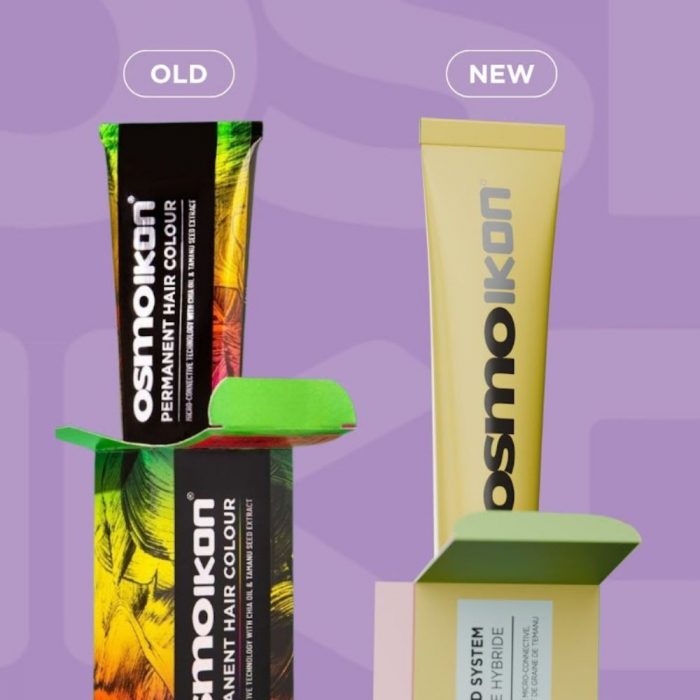
The Complete OSMO Shade Change Reference Guide
Here’s every confirmed OSMO shade change, pulled directly from OSMO’s official communications. So, save this, screenshot it, and pin it in your colour room.
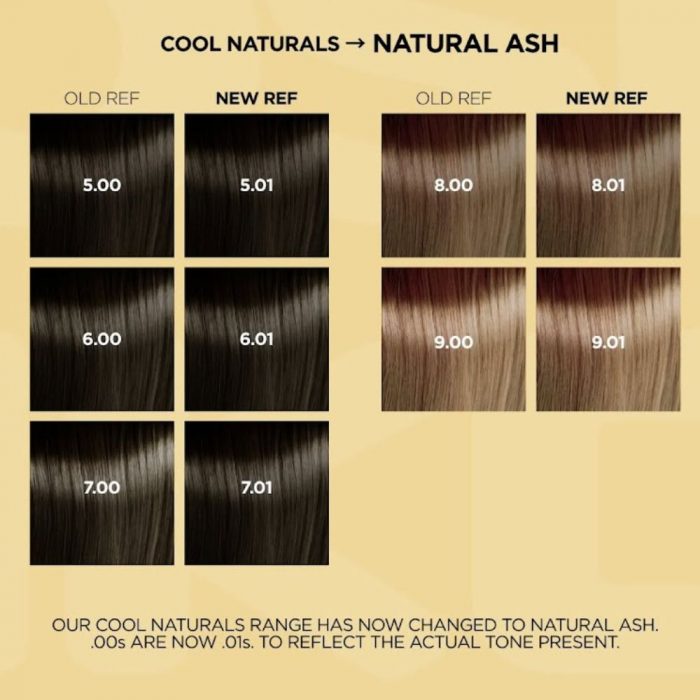
Cool Naturals, now Natural Ash (.00s become .01s)
To begin with, the Cool Naturals family has been renamed Natural Ash, and all .00 shades now carry a .01 suffix to accurately reflect the ash tone that was always present in these shades.
Why the change? The .00 code implied a perfectly neutral shade with no reflect — which was never quite accurate. These shades have always had a cool, ashy quality. The .01 suffix makes that honest from the number alone, which is helpful when formulating for grey blending or clients who want zero warmth.
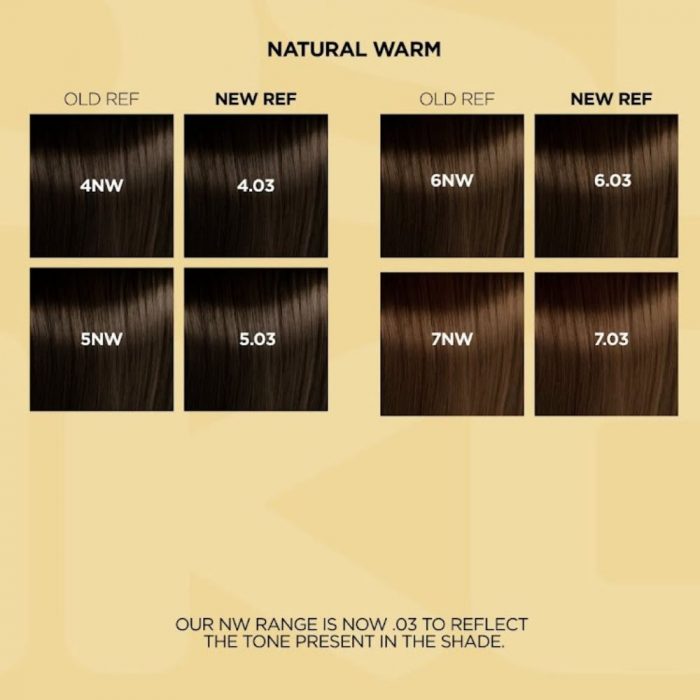
Natural Warm (NW becomes .03)
Following on from this, the NW range is now simply numbered as .03 across all levels, reflecting the warm, golden-natural tone that defines this family.
So, why the change? Letter codes like NW sat outside the numerical system, making them harder to teach and cross-reference. As a result, the .03 designation slots them neatly into the range alongside everything else.
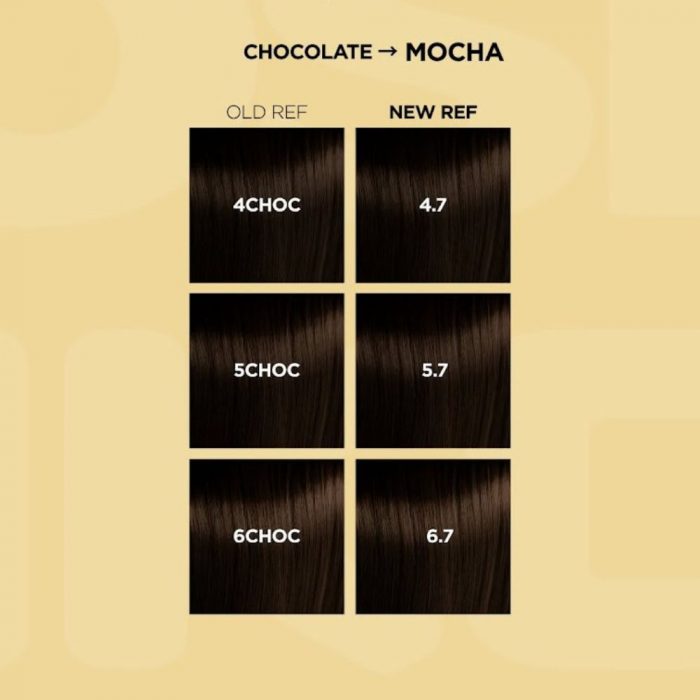
Chocolate, now Mocha (CHOC becomes .7)
Another notable change — the Chocolate family has been renamed Mocha and now carries a .7 reflect designation, a more accurate description of the rich, warm-brown tone these shades deliver.
Why the change? “Chocolate” is evocative, but tells a colourist nothing about reflect or tone. The .7 code communicates the warmth immediately. The colour itself is unchanged — still glossy, dimensional, rich brunette.
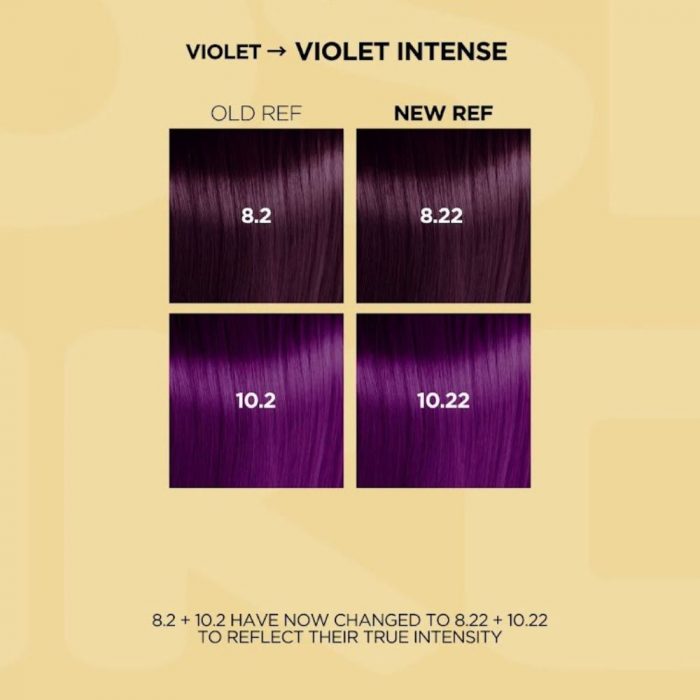
Violet, now Violet Intense (8.2 and 10.2 become 8.22 and 10.22)
The Violet shades have moved from .2 to .22 — the double reflect code signals a more saturated, fashion-forward result. A single .2 implies a subtle violet tone. These shades are anything but subtle, and the .22 is a far more honest description.
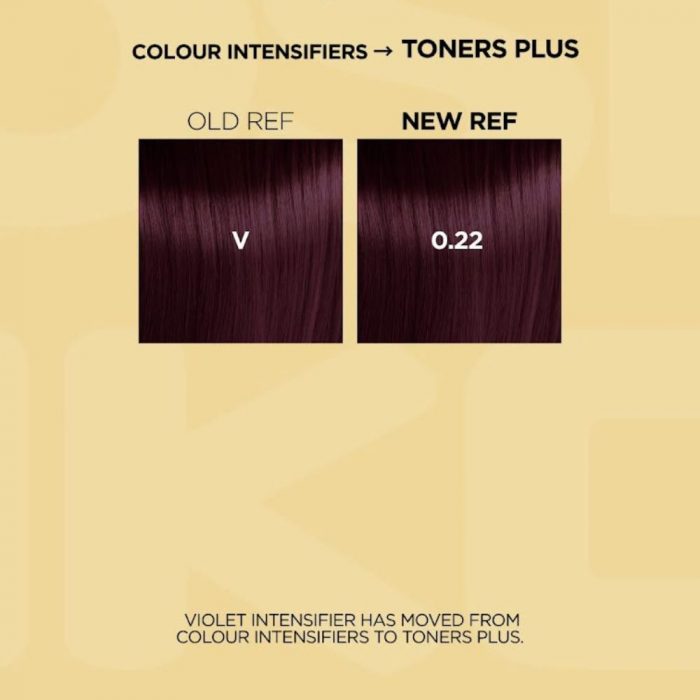
Colour Intensifiers, now Toners Plus: Violet Intensifier
Meanwhile, the Violet Intensifier has moved from Colour Intensifiers into the new Toners Plus family. The 0. prefix indicates pure pigment — no natural base — designed to add into formulas or use as a standalone toner.
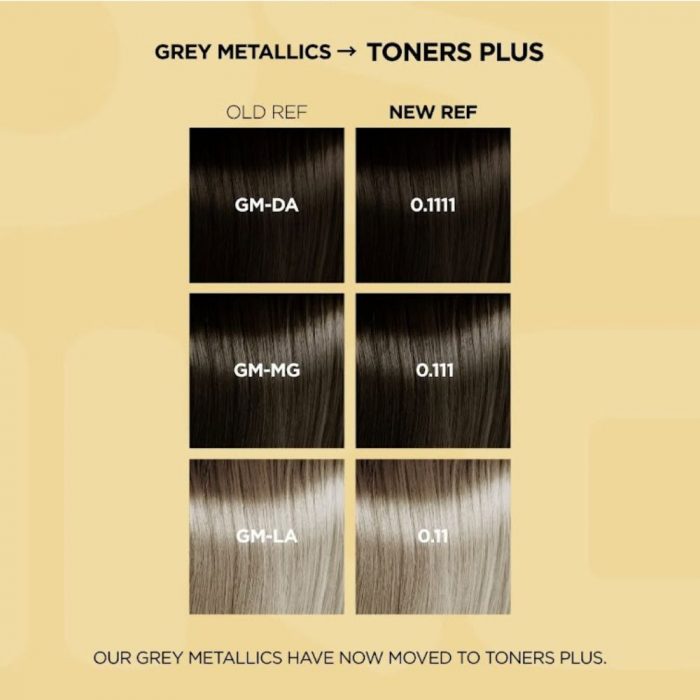
Grey Metallics, now Toners Plus
The Grey Metallics range has moved into Toners Plus — a logical home given how colourists already use them. The new 0.11 series codes also make strength selection more intuitive: the more 1s, the darker the ash grey.
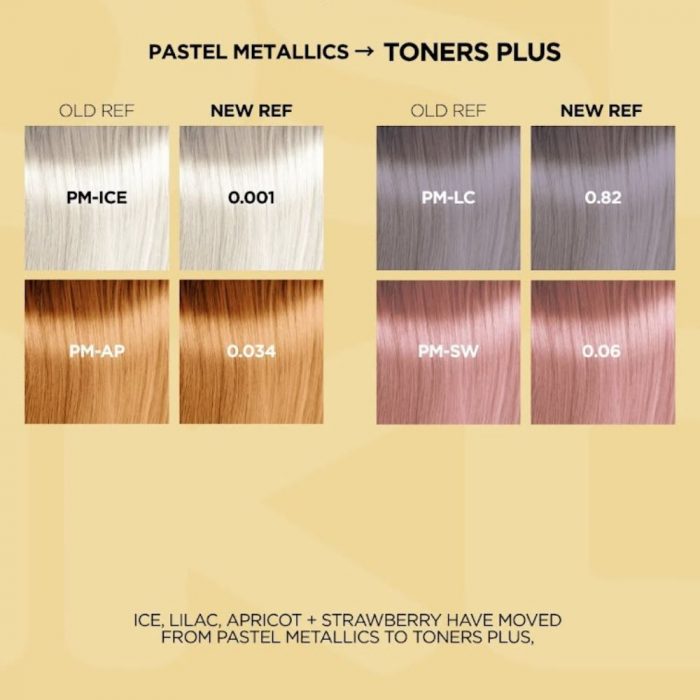
Pastel Metallics, now Toners Plus: Ice, Lilac, Apricot and Strawberry
Furthermore, four fashion toners have moved into Toners Plus with full numerical references. Vivid, intermixable, and built for pre-lightened hair.
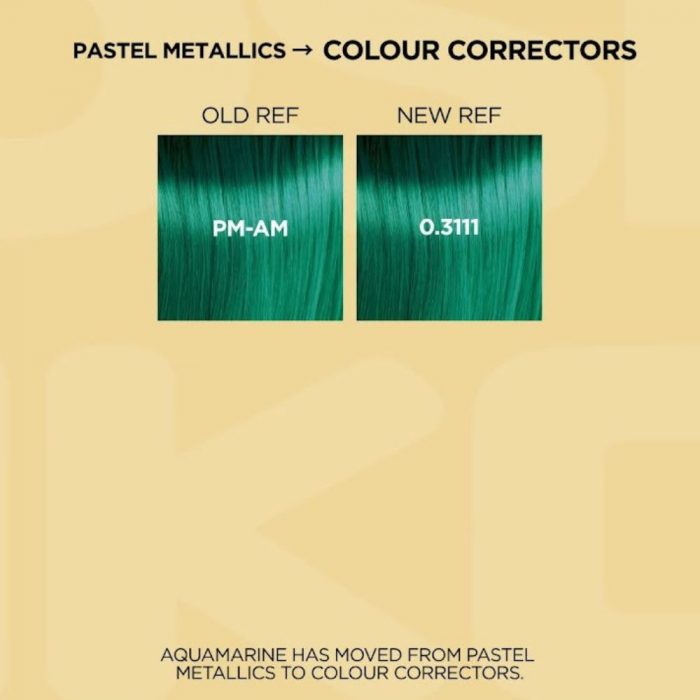
Pastel Metallics, now Colour Correctors: Aquamarine
Similarly, Aquamarine has moved into Colour Correctors — reflecting how it’s most commonly used in the salon.
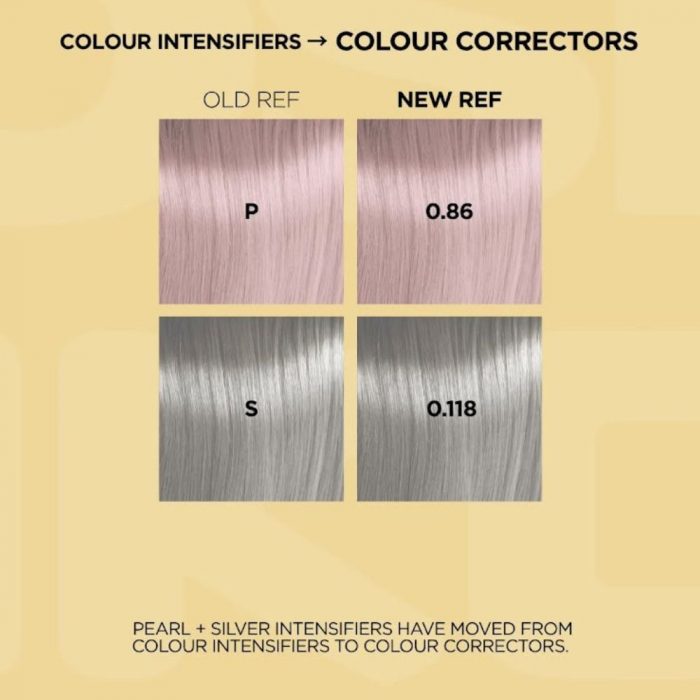
Colour Intensifiers, now Colour Correctors: Pearl and Silver
Finally, Pearl and Silver have moved into Colour Correctors — a better fit for how they’re actually used. Both are primarily corrective tools: neutralising warmth, adding iridescence, refining blondes.
What Hasn’t Changed
Above all, for all the renaming, the core OSMO IKON experience is exactly as you left it:
- Low ammonia formula for a comfortable colour service
- 100% vegan and cruelty-free across the full range
- Full, reliable grey coverage
- Fully intermixable shades across the 1-12 series
- Long-lasting results with consistent, even fade
- MCT (Micro-Connective Technology) locking colour deep into the cortex
Transitioning Your Salon: 5 Quick Steps
- Use this guide to cross-reference your most-used shades
- Updated your OSMO IKON Deluxe Shade Guide for your colour bar
- Update client record cards before your next colour appointment
- Brief your team so nobody’s caught out mid-service
- Label any mixed old/new stock to prevent errors during busy days
Do that once, and the new system pays you back every day — faster consultations, cleaner formulas, and a colour bar the whole team can navigate confidently.
Shop OSMO IKON at Adel Direct | Browse all permanent hair colour
FAQs
Have OSMO IKON shade numbers changed? Yes. OSMO has moved to a fully numbered reference system based on the International Colour System. Some shade names and family groupings have also changed. The colour formula and results inside every tube remain exactly the same.
What is the difference between Toners Plus and Colour Correctors in the new system? Toners Plus covers fashion pigments and grey/metallic toners used to enhance or shift tone on pre-lightened hair. Colour Correctors are used to neutralise or correct unwanted tones during formulation. Both now follow the same 0. prefix numbering system.
Is the OSMO IKON formula different? No. The formula is unchanged. Low ammonia, vegan-friendly, cruelty-free and built on Micro-Connective Technology — exactly as before. Only the packaging and shade references have been updated.
Why did the Chocolate shades get renamed Mocha? The Chocolate shades were renamed Mocha to better reflect the warm-brown tones they create, while the new .7 reflect code also keeps the range more consistent and easier to navigate for colourists.
Looking for more OSMO guidance? Read our complete OSMO hair colour guide covering the full range.
Comments are closed here.